

How the Minnesota Wild Expanded Their Psychological Addressable Market™
(Let's Go Wild!)
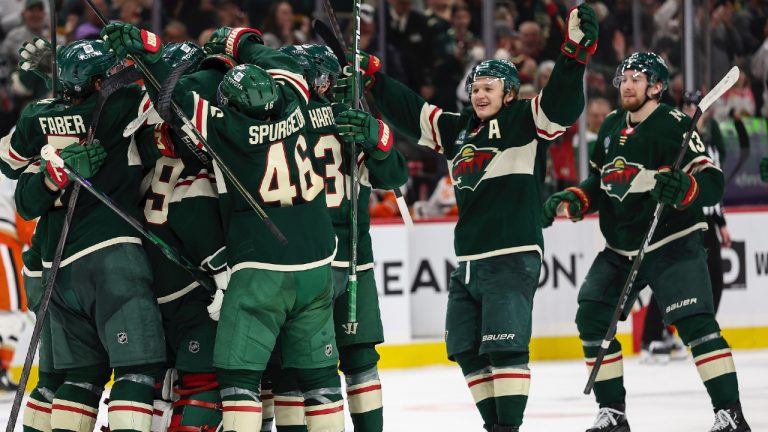
Player highlights and game-day energy sell season tickets. That's not wrong – it works. But what if there's a whole segment of potential buyers who aren't motivated by the game itself?
The Minnesota Wild professional hockey franchise used the Hive Platform to find them.
The Challenge
The Wild had strong renewal rates among existing season ticket members. The fans who loved the game were staying. But acquiring new members – especially younger ones – had plateaued.
The traditional approach was working for the people it was designed to reach. The question was: Who else is out there, and what would motivate them to join?
Season ticket sales are cyclical, with most activity concentrated in the off-season. They needed answers fast.
Step 1: Understanding the Psychology
Using the Hive Platform, the Wild revenue marketing team cast a wide net across their media market. They had hypotheses going in – maybe high-income, high-octane personality types who'd respond to more of what was already working. The Hive data revealed something more interesting: a segment of potential buyers with a completely different motivation.
Some psychological drivers of purchase were familiar:
- These buyers are socially energized, extraverted and seek out group experiences.
- They have a gain-orientation; they prioritize opportunities for upside even when some risk is involved.
- More than others, they see the world as exciting & full of opportunity.
But some hidden drivers pointed to an untapped angle:
- These purchases & experiences communicate identity to others - a season ticket membership isn’t just access - it’s a statement about who they are, to be seen by those around them.
- New potential buyers see the purchase as a way to move closer towards the person they’re trying to become in life.
- They’re not always driven by love for the sport itself, but as a means to other ends - networking, social positioning, relationship building. The game is the vehicle, not the destination.
The picture that emerged revealed an expansion opportunity: there's a segment of potential members who aren't primarily buying hockey. They're buying membership – and everything that membership signals to their network.
Step 2: Applying the Insights
The existing creative – player highlights, stadium atmosphere, game excitement – continued to resonate with fans motivated by the sport itself.
But now the creative team had a new angle to reach a different segment: marketing focused on the member – who they could become with a membership, how their network would perceive them, what doors would open.
This wasn't about replacing what worked. It was about expanding the reasons to believe – adding a new message track for buyers who weren't responding to the traditional approach.
Think about it: For some fans, the draw is watching a great game. For others, it's being the person who got their friends into a great game that was sold out. Now the franchise can speak to both of these psychological drivers with confidence.
The Results
The Wild ran a true A/B test of creative performance in paid social campaigns for membership deposits. Budget, impressions, reach were all held constant — the only variable was the creative itself.
The shift wasn't about better production or a flashier ad. It was about matching creative to the psychological dimensions that actually predict action. The same media budget — but different creative built on different psychology, dramatically different results.
A/B Results Impact (Meta Campaign):
- Click-through-rate (CTR): 64% Improvement
- Clicks: 65% More Clicks
Beyond the lift, the MN Wild marketing team also gained a strategic advantage:
- An expanded addressable market: The team identified a segment of potential buyers they weren't reaching with existing creative – and now had a clear strategy to speak to them.
- Net-new creative territory: Within weeks, the team generated concepts that complemented their existing approach. Ideas that speak to aspiration and social positioning, reaching buyers who weren't motivated by game excitement alone.
- A broader strategic toolkit: The team now has multiple angles to deploy across the season – game-focused creative for fans motivated by the sport, membership-focused creative for buyers motivated by status and identity.
The Bigger Picture
Great marketing isn't always about finding what's wrong and fixing it. Sometimes it's about finding who else is out there – your hidden Psychological Addressable Market™.
The Minnesota Wild didn't abandon what was working. They expanded it – adding a new psychological angle that unlocks a new segment of buyers.
The game still sells. Now membership does too.