

Our story
We all know the friend who drives a Volvo and the one who drives a Porsche. The one who crafts elaborate orders at Starbucks versus the one who just wants "a coffee" at Dunkin. The person who impulsively races out of the house to make a major purchase and the one who spends three days building a spreadsheet weighing their options before they'll leave the house.
These aren't just personality quirks. They're patterns: predictable, measurable patterns in how people make decisions. And for their entire careers, Julie O'Brien and Steve Fogle have been working to explain them at scale.
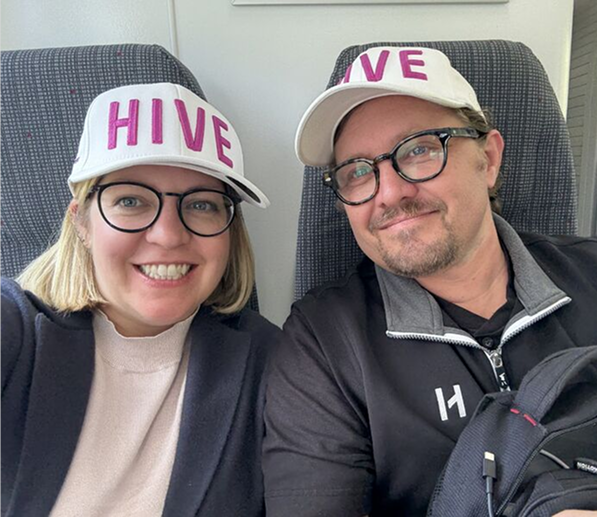
Julie is a behavioral scientist with a PhD in social psychology. She started out in academia, studying the decision mechanisms behind behavior. She was drawn to this work because she saw these mechanisms as a universal key for understanding any kind of behavior, from medication adherence to clicking on an ad. But she didn't want to just write papers about human decision-making—she wanted to solve real problems. So she left academia to help brands achieve important outcomes. She built the healthcare consulting practice at Duke University's Center for Advanced Hindsight and spent years leading behavioral science teams at companies across industries, like Weight Watchers and U.S. Bank, translating science into outcomes.
Steve came at the problem from a different angle. As a partner at Deloitte Digital with expertise in data science, CX, and personalization, he spent years delivering large-scale marketing and technology transformations for global brands. He saw firsthand how companies were making billion-dollar decisions based on surface-level data (demographics, past purchases, stated preferences) while the actual WHY behind customer behavior remained a black box. Steve employed behavioral science in his work, but it couldn’t scale and was too slow.
When they met at U.S. Bank, they realized they were chasing the same thing: a way to decode human decision-making at scale.
The Work
This wasn't solved by renting a YouGov data feed and wrapping it in AI. It took a decade of mapping and modeling hundreds of core psychological mechanisms that drive decisions—like mapping the entire periodic table, but for choice. Then three more years collecting millions of proprietary data points from tens of thousands of real people, thousands of AB tests, co-developing the technology alongside some of the world's largest brands, and filing patents on new AI/ML innovations like behavioral compression to make it all work. Steve & Julie also surrounded themselves with a team of the world's most passionate and incredible scientists and engineers to make this possible.
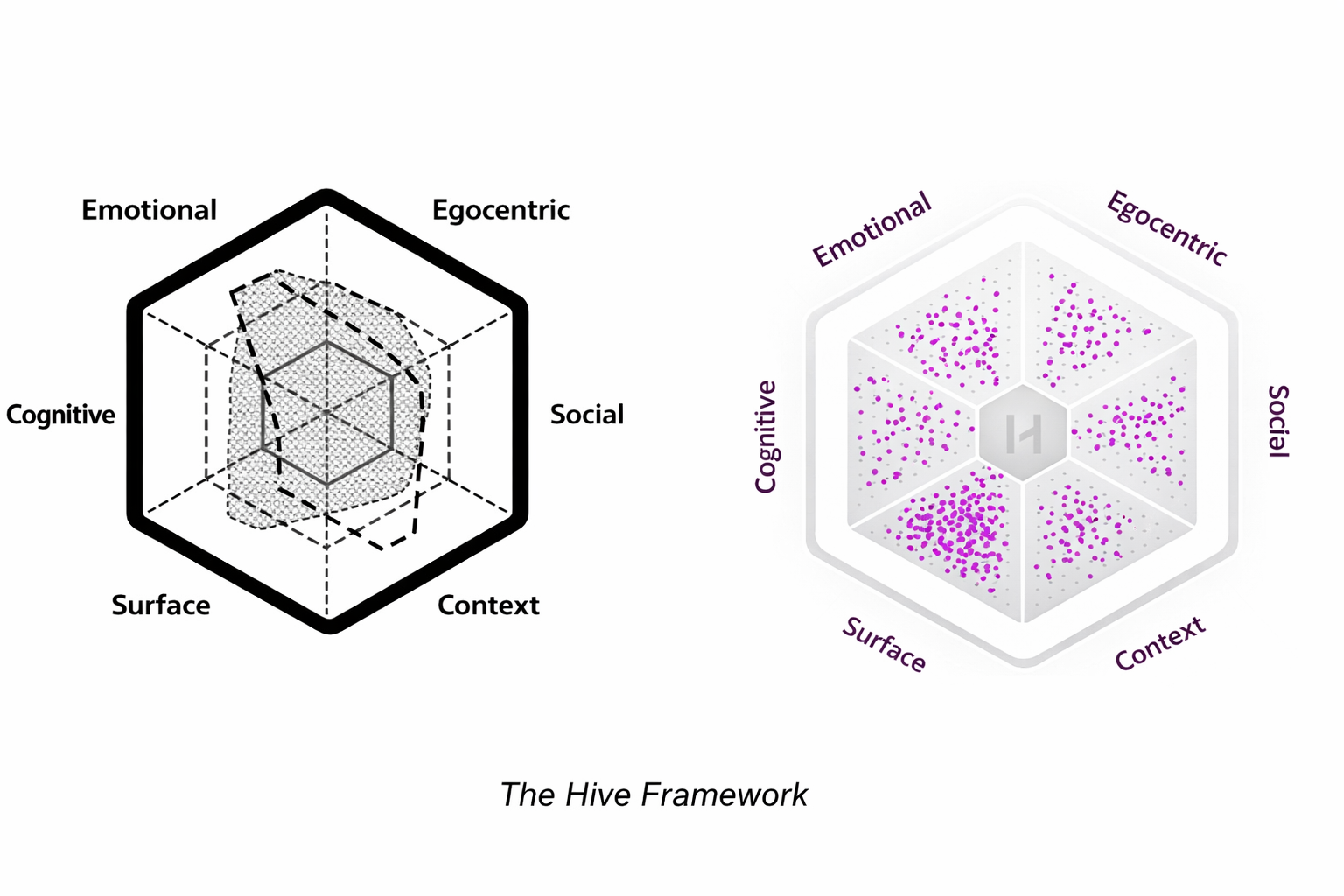
Here's what makes this different: people don't make decisions based on what they look like. They make them based on how their cognitive, emotional, social & context patterns decide to act. Your customers don't have a "banking part" of their brain and a "grocery shopping part" of their brain—they have a core set of psychological mechanisms they use every day to make thousands of decisions.
For the first time in history, brands can see past who their customers are on the surface and what they do, and actually understand precisely WHY they choose one product over a competitor.
What This Unlocks
When brands can see what psychologically predicts purchase for their unique products, and use advanced tools from Hive to match their strategies, product design, media, and marketing to these patterns, we see an entirely new level of creativity and speed to impact.
We've watched brands like Jaguar Land Rover nearly double Defender sales in a year. Six Fortune 100 companies and major brands including Keurig Dr Pepper, Accenture, and the NHL are using Hive intelligence across automotive, healthcare, financial services, CPG, and retail. The results speak for themselves.
But this is just the beginning. Some of the biggest problems in the world are fundamentally about behavior – how people choose to take action, change, or engage. We built Hive to decode that. In 2026 Hive intelligence is now scaling to improve how media is bought, to how corporate strategy is set, to how the world’s biggest brands design new psychologically optimized products in the first place. Thank you to all of our anchor brands, and to our new global agency partners. We are excited to continue locking arms and creating a renaissance of creativity, as we transform how work is done together.
.png)